
The short verdict
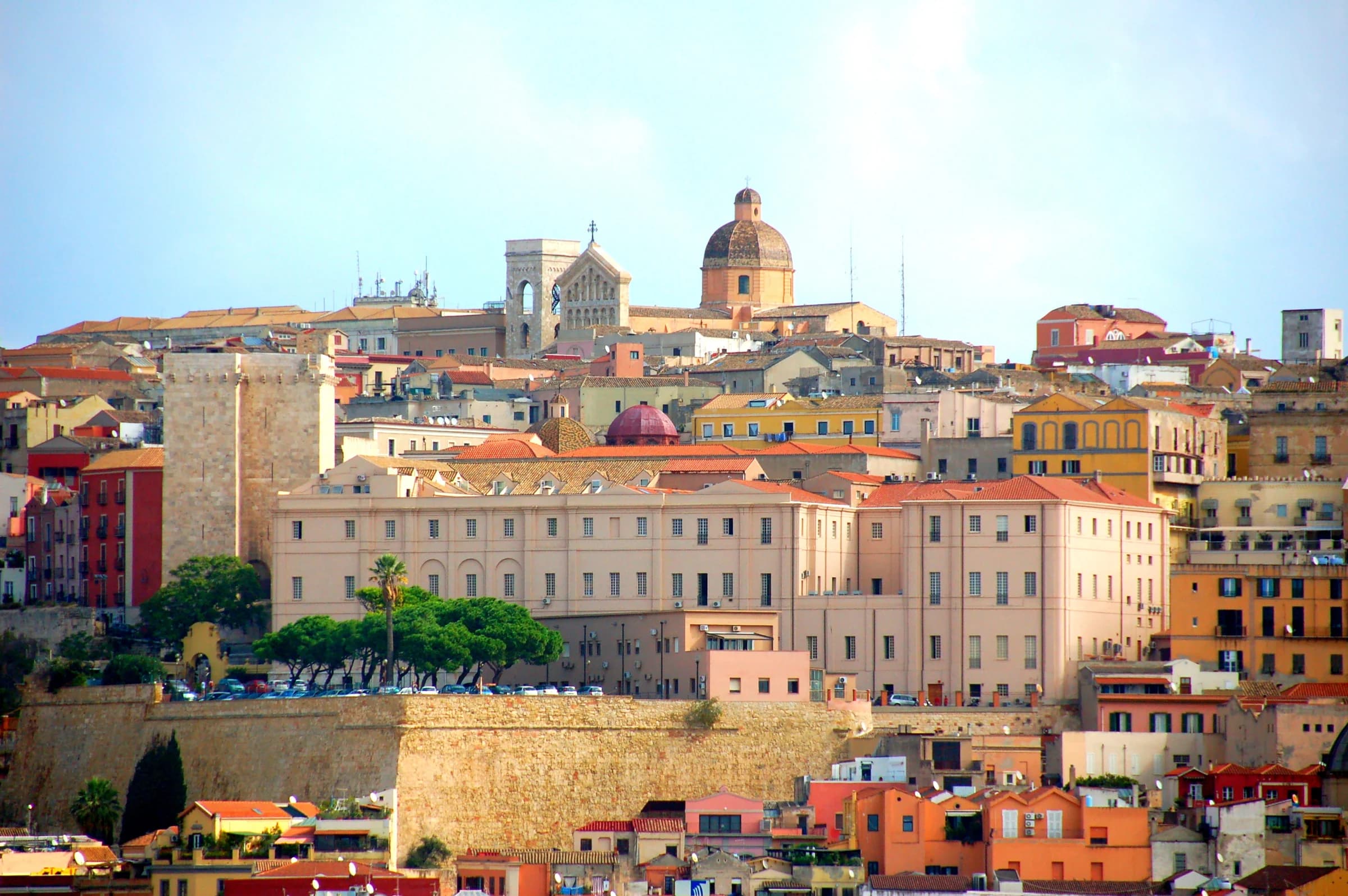
Castello is the experience-led choice: its elevated fortified district is the reason to stay. Marina is the logistics-led choice: its lower position beside Via Roma creates the stronger station relationship. Both are historic, but the practical consequences differ from the first arrival.
If you are arriving with substantial luggage, avoiding climbs or making several regional journeys, begin with Marina. If the hilltop setting and upper historic streets are central to the trip, begin with Castello and solve the arrival separately.
Compare the same decision dimensions
Arrival and luggage
The current routed reference points place Castello at roughly a 24-minute walk from the station side and Marina at roughly eight minutes. These are comparison baselines, not doorway promises. The Castello route also carries the practical consequence of the hilltop setting.
For bags, inspect the final street and entrance. A taxi for check-in can make Castello workable without requiring a car for the stay. Marina’s shorter approach is still valuable, but it cannot confirm a lift, stairs or reception arrangement at the property.
Two different kinds of historic setting
Castello is defined by fortifications, towers, gates and the former seats of civic and religious power. Marina is defined by lower historic streets, Via Roma and port-related origins. The distinction is geographic and historical, not a claim that one has more authentic daily life.
Choose the setting you want to encounter repeatedly. Castello makes the upper district the starting point; Marina makes the harbour-side lower city the starting point. A short visit magnifies this difference because there is less time to compensate for a poorly matched base.
Plan daily journeys from each base
From Castello, group upper-city stops before descending and avoid unnecessary repeated climbs. From Marina, use the station-side position for outward journeys and make Castello a deliberate uphill segment. The better base is the one that removes the movement you would otherwise repeat.
Both areas can connect into the urban network, including journeys towards Poetto from suitable stops. The exact stop, waiting time and final walk still matter, so do not let a general transport label replace the day’s route.
Who should choose each area
Four common scenarios
When neither is the ideal answer
Neither area is automatically right for a beach-led holiday. Poetto may reduce repeated travel to the shore. Neither can guarantee a quiet room, parking or step-free access. If one of those conditions is essential, widen the search using verified property and route information.
The where-to-stay hub covers a broader shortlist, including Villanova and Poetto within the current evidence. Use it when the decision is not genuinely down to these two historic districts.