
What works without a car
The strongest car-free trip uses Cagliari as a connected base: arrive by train from the airport, explore the central districts on foot, use CTM for urban journeys and reserve ARST for specific regional routes. This is a practical city-break model, not a claim that every corner of South Sardinia is equally easy without a vehicle.
Build confidence route by route. Airport to station, station to Poetto and selected approaches to Molentargius have supporting evidence. Villasimius and Pula can have regional services, but each needs a return plan and may still leave an unverified final journey from town to the attraction or beach.
Build a whole-stay strategy from the base
Arrive from the airport by train
The airport operator reports a rail connection to Cagliari and about five minutes on the train. Add the terminal-to-station movement, waiting time and the onward route from Cagliari station. The short rail segment should not be mistaken for the complete airport transfer.
If the final address is difficult with luggage, compare a taxi for that arrival even when the rest of the stay remains car-free. Renting a car for the entire trip is a separate decision from using one direct transfer when it solves a specific arrival problem.
Build city days around walking and short links
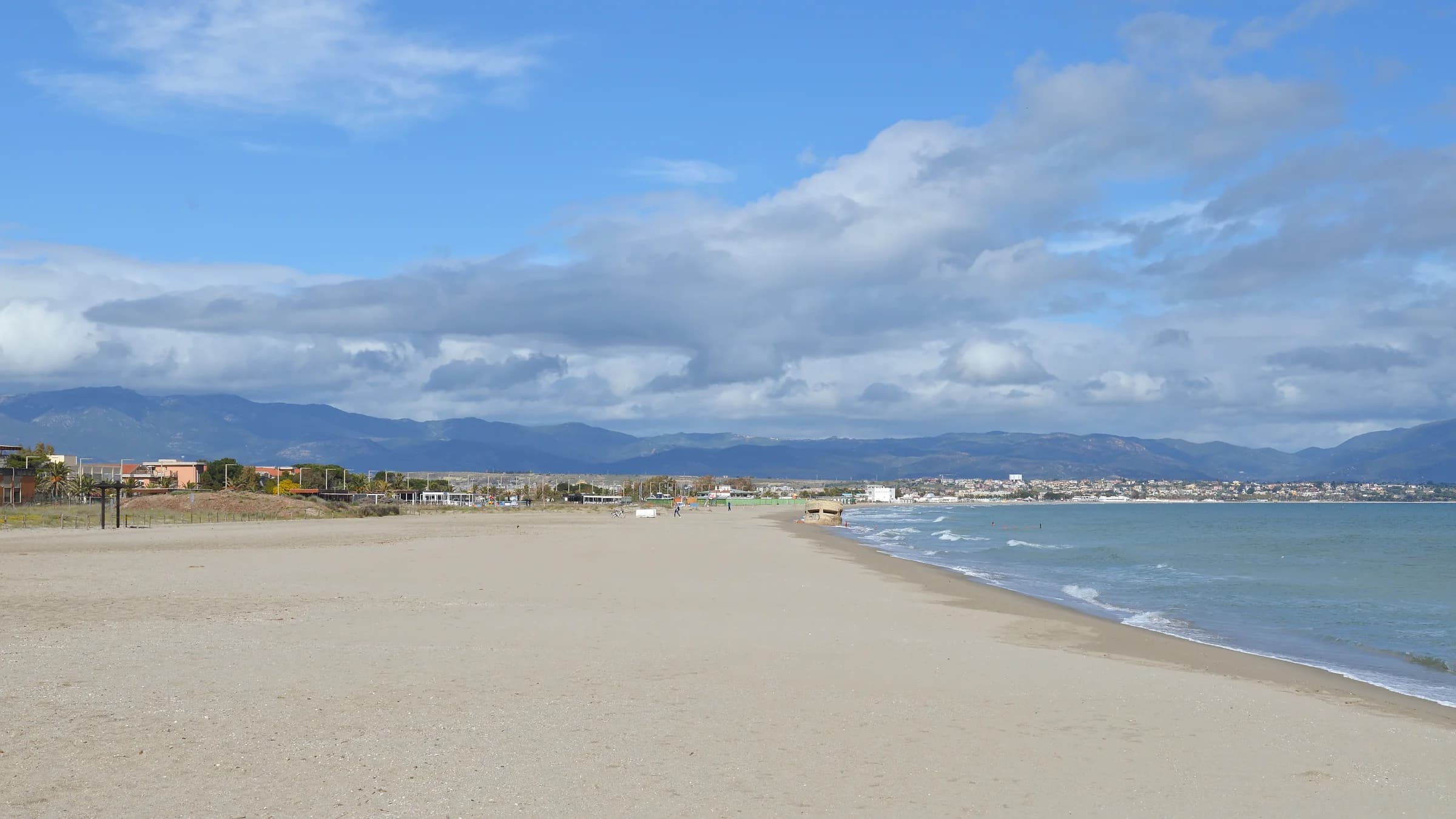
Poetto is the easiest beach plan
The assessed CTM corridor links the station area with a selected Poetto stop in about 25 minutes on the timetable date. Add the initial wait and both walks. Choose the beach entrance first because the route ends at one stop on a long shore.
A Poetto visit can stay flexible: a two-to-three-hour beach window becomes a half day once travel is included. That leaves room for another Cagliari plan and avoids committing the whole day to a regional coast journey.
Molentargius needs an entrance plan
Molentargius can fit a car-free stay when you route to the Sali Scelti entrance or deliberately use the waterfront path. A bus result alone is incomplete; the useful plan includes the remaining walk from the stop to Via La Palma.
Pair the park with Poetto only when the two access plans fit. The wetland visit and the beach remain separate destinations, so allow one to two hours inside the park before adding travel and beach time.
Regional day trips need a return-first method
For Villasimius, a direct ARST service can reach the town on a compatible day, while the selected beach may need another leg. For Pula, reaching the town does not automatically complete the journey to Nora. These gaps are planning constraints, not reasons to pretend that no service exists.
Choose the return before the outward journey. Then subtract both travel directions and the final legs from the usable time at the destination. If the remaining visit is too short or the fallback is weak, move the excursion to a car day or choose a city-side alternative.
When a car becomes useful
Three workable stay shapes
Mistakes that make a car-free trip feel harder
Do not count time on the vehicle as door-to-door time. Do not route to a neighbourhood, park or town name without the final entrance. Do not leave the return decision until late in the day. These three errors create most of the avoidable uncertainty in the verified journeys.
Avoid adding destinations simply because a route exists. Service availability, usable departure times, transfers, walking and the return all matter. A trip is feasible only when the complete chain fits your day and your mobility needs.