
Choose the operator before the route
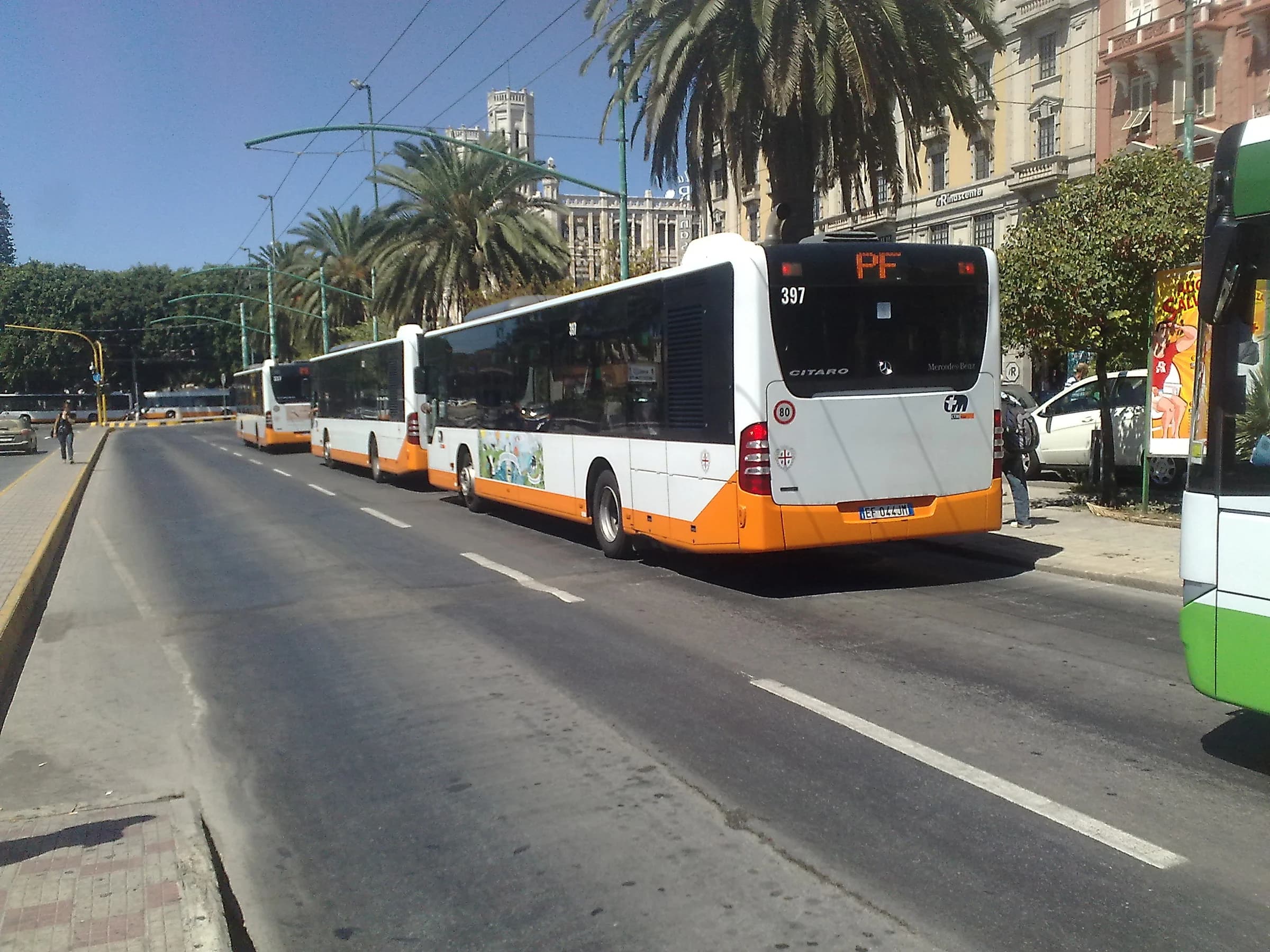
CTM for urban Cagliari
Official CTM timetable data supports direct and one-change queries between named urban stops. This makes it useful for routes such as central Cagliari to Poetto and selected approaches to Molentargius.
A result is tied to the service date and stop pair. Add waiting and walking, then check the operator’s current service notices. Use the result to understand the journey, then confirm the exact departure again for your travel date.
ARST for regional journeys
ARST timetable data supports direct and one-change queries for compatible regional dates. It is the relevant layer for journeys such as Cagliari to Villasimius town or Pula when a service exists.
Regional service availability is only one part of feasibility. Frequency, the arrival point and the final destination can limit flexibility. A bus to a town should not be described as a bus to every beach or attraction in that municipality.
The airport rail connection
The airport operator reports a train connection with Cagliari and a short ride to the city station. Use current rail information for the actual departure and ticket. The journey continues from the station to the accommodation.
For Marina, that final leg can be relatively short from the station-side reference point. For Castello, the hilltop approach matters more, particularly with luggage. The same airport train therefore produces different door-to-door decisions.
How to plan a complete journey
First identify the operator and exact origin stop. Second select the service date and outward journey. Third map the arrival stop to the real entrance. Fourth choose the return. Finally add walking, waiting and a margin for the activity.
Use named stops rather than a destination label when possible. If the timetable confirms only the stop-to-stop journey, treat the final leg as unresolved. This preserves a valid transport fact without overstating trip feasibility.
Plan outward and return together
A route that works in the morning may have a weak return for the time you want. Regional days are especially sensitive to this. Select the return before building lunch, beach time or a second activity around the outward trip.
For urban trips, a later return can still change the most useful stop or line. Keeping both directions in one plan also reveals whether the apparent convenience relies on a transfer or long final walk.
A stop is not the destination
Poetto extends along a long shore, Molentargius has a named entrance, Villasimius town is separate from several beaches and an accommodation can sit far from its neighbourhood reference point. In every case, the last leg can determine whether the route is actually useful.
Record the stop name, final walking distance and any additional local connection. When that final link is unverified, state the limitation and avoid converting town-level access into door-to-door certainty.
Buy the ticket, then complete the validation step
For CTM, buy through Busfinder, Around Sardinia, a ticket machine or an authorised sales point. Piazza Matteotti has a CTM ticket point and machine by the transport interchange. A ticket held in an app still needs the app’s onboard QR validation step.
For ARST, use Around Sardinia or another current authorised channel, then follow the validation rule for that ticket. If the validator is unavailable, use ARST’s stated onboard procedure rather than travelling silently with an unvalidated ticket.
For Trenitalia, use the app or website, a station ticket office or a ticket machine. The current Digital Regional Ticket activates automatically at the selected train’s scheduled departure; a paper regional ticket must be validated before boarding.
Check accessibility with the operator that controls each leg
For an urban bus, ask CTM about the vehicle, stop and temporary route change. For a regional bus, use ARST’s service information. For rail, check Trenitalia and the airport station connection. A route planner can show a journey without proving that every pavement, platform or vehicle meets a particular access need.
When a connection depends on a short transfer, inspect the interchange itself: distance between stops, crossing, lift availability and time margin. If one leg remains uncertain, choose a simpler direct route or arrange that leg separately.
Three door-to-door examples
Airport to Marina: walk from arrivals through the covered link to Elmas Aeroporto station, take Trenitalia to Cagliari, then walk from Piazza Matteotti to the exact Marina address. If the final walk and luggage are a poor match, switch to a taxi for the whole journey.
Centre to Poetto: start at Piazza Matteotti, check Busfinder or Around Sardinia for a current CTM service, alight at Poetto (opposite Ippodromo), cross from the lungomare to the Fifth Stop beach access, and save the return stop and service before swimming.
Cagliari to Villasimius: start at Cagliari Autostazione ARST, use line 101 for a compatible service date, arrive in Villasimius town, then complete a separately planned final leg to Simius, Porto Giunco or Campulongu. Build the return from the town stop before choosing the beach.